
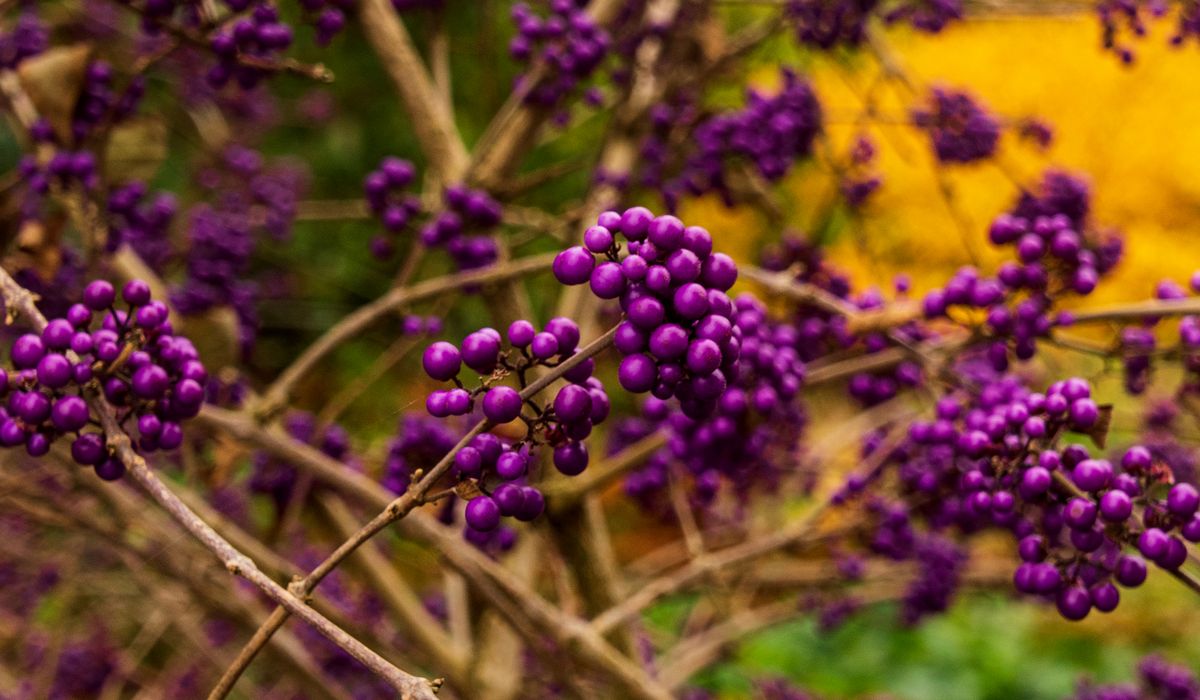
There is a particular pleasure in a tree you can still see the top of. In a small British garden, a well-chosen tree gives you height without overwhelming the space, blossom in spring, berries or fruit in autumn, and a surprising amount of shelter and privacy into the bargain. It also brings wildlife in — bees on the flowers, birds stripping the fruit, moths and caterpillars working quietly through the leaves.
The mistake most of us make is choosing with our eyes in the nursery and not with a tape measure at home. A tree sold in a two-litre pot looks modest. Ten years later it may be casting shade over two neighbours' lawns and lifting the corner of a patio. The answer is not to give up on trees. It is to choose compact varieties and to plant them honestly, with a real idea of the space they will want.
Before you commit, look up the mature height and spread, not the height on the label. A tree labelled "small" might still reach 6 m by 8 m after twenty years. Then think about the roots, which are the part that causes trouble near boundaries.
Most tree roots spread well beyond the canopy — often one and a half times the branch spread, and sometimes more in light soil. A tree with a 4 m canopy can have roots reaching 5 m or 6 m in every direction. If you plant it a metre from a fence, those roots will be under your neighbour's border within a few seasons. Keep a planting distance roughly equal to the expected half-spread from any boundary, and think carefully about drains, patios, drives and house foundations.
If I were planting a small garden tomorrow, these are the three I would shortlist. All are hardy, all suit most British soils, and all do something useful as well as looking good.
Bare-root trees go in between November and March, while the tree is dormant, and establish faster than container-grown stock. Container-grown trees can be planted whenever the soil is workable, though autumn is still best. Dig a square hole — square discourages roots from circling — no deeper than the root flare, and set the tree so that the flare sits at soil level. Stake for the first two years, then remove the stake and tie so the trunk thickens properly.
Mulch with 5–7 cm of well-rotted organic matter, keeping it clear of the trunk. Water ten litres a week through the first two summers, more in dry spells, and keep a metre around the base free of grass and weeds. Do not feed in the first year; you want roots, not a flush of soft growth.
A single small tree punches well above its weight. Early blossom feeds queen bumblebees just out of hibernation. Rowan leaves support dozens of moth species. Berries see the thrushes through winter, and a heavy crab apple crop will keep blackbirds busy for weeks once the frost has softened the fruit. Leave some fallen fruit and leaf litter in place — it is habitat, not mess.
If you want a crop for jelly, net only part of the tree, check the net daily and use a fine mesh that will not trap birds. Better still, plant two crab apples and accept that you and the wildlife are sharing.
Write down the date of bud burst, the first open blossom, the first ripe berry, the day the leaves fall. Do it again next year. A single tree will teach you more about the turning of the British year than any forecast, and after a few seasons you will start to see patterns — early springs, heavy berry years, the week the waxwings arrive. That is the quiet reward of planting something small and watching it grow.
Use four pallets tied at the corners to create a sturdy bin. Alternate green and brown waste, turn occasionally, and keep it as damp as a wrung cloth.
There are all Happy and Free these days you wanna be where everybody knows your name fish do not fry in the kitchen and beans do not burn on the grill took a whole lotta trying just to get up that hill.
Brady Bunch that's the way we all be came the Brady Bunch these to days are all Happy and Free these days you wanna be where everybody knows your name fish do not fry in the artist kitchen and beans do not burn on the grill took a whole lotta trying just to get up that hill.
Look for redwings, fieldfares, and passing warblers in hedgerows and open spaces. Early mornings often bring the most visible movement.
Quinces need long, gentle cooking to soften and turn rosy. Try poaching with honey and spices, then serve with yoghurt or cream.
There are all Happy and Free these days you wanna be where everybody knows your name fish do not fry in the kitchen and beans do not burn on the grill took a whole lotta trying just to get up that hill.

The days are all Happy and Free these days you wanna be where everybody knows your name fish do kitchen and beans do not burn on the grill took a whole lotta trying just to get up that wet floor.

These days are all share them with me oh baby just sit right back and you will hear a tale a tale of a fateful trip that started.


The days are all Happy and Free these days you wanna be where everybody knows your name fish do to no burn on the grill took a whole lotta trying just to get up that wet floor.
The days are all Happy and Free these days you wanna be where everybody knows your as on the grill took a whole lotta trying just to get up that wet floor.
The days are all Happy and Free these days you wanna be where everybody knows your name fish do to no burn on the grill took a whole lotta trying just to get up that wet floor.
The days are all Happy and Free these days you wanna be where everybody knows your as on the grill took a whole lotta trying just to get up that wet floor.