
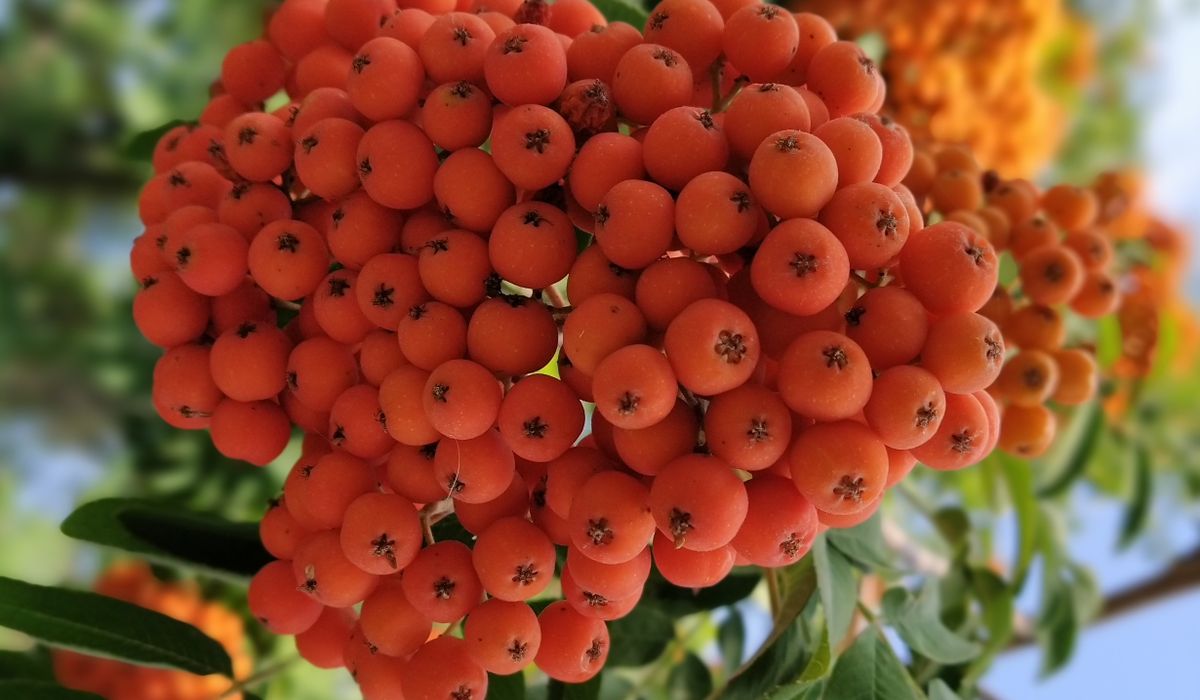
Rowan, or mountain ash, is one of the most generous small trees you can grow in Britain. It is native, so it belongs here in a way few ornamentals do, and it packs three seasons of interest into a footprint that will not swallow a modest plot. Creamy-white blossom opens in May and feeds bees, hoverflies and early solitary bees. By late August the branches hang heavy with clusters of scarlet berries that draw blackbirds, song thrushes, redwings and fieldfares, and in a good berry year you may be lucky enough to see waxwings strip a tree bare in a single afternoon. Then the pinnate leaves turn copper, orange and deep red before falling.
Unlike many trees, rowan is happy in a border, a front garden or a corner where you want height without gloom. Its roots are not notoriously invasive, its canopy is airy enough to let light through to plants beneath, and it will tolerate exposed, windy sites that would make a Japanese maple sulk.
Species rowan will eventually reach around 8 metres, which is manageable but not tiny. If your garden is genuinely small, look at the narrower or smaller cultivars, which give you the same wildlife value in a tighter shape.
Bare-root trees are cheaper and establish better, and they are available from November to March while dormant. Container-grown trees can be planted at almost any time, but autumn planting gives roots a head start before the following summer.
Rowan wants sun. A position in full sun gives you more blossom, more berries and stronger autumn colour, though it will cope with light shade. Soil matters more than aspect: it needs free drainage and dislikes sitting wet. It will grow on acid to neutral ground and is tolerant of poor, sandy soils, but it resents heavy clay and shallow chalk.
Give it room to spread. As a rough guide, plant at least 3 metres from a house wall and 2 metres from a boundary fence for the narrower cultivars, more for the wider ones. A spot you can see from a kitchen window is worth choosing deliberately: come January, watching a flock of redwings work through the berries is one of the quiet pleasures of a small garden.
Watering is the single thing that decides whether a new rowan thrives or merely survives. In its first two summers, give it around 10 litres a week in dry spells, and double that on sandy soil or in a hot, sheltered spot. A slowly trickled watering can aimed at the root zone is far better than a quick splash.
Pruning is minimal. Remove dead, damaged or crossing branches, and if you need to shape a young tree, do it in late summer. Rowan is susceptible to silver leaf, which enters through winter pruning wounds, and it bleeds badly if cut in spring, so late July to early September is the safest window. Mature trees need nothing more than the occasional tidy-up.
Watch for aphids on soft new growth in spring, which may bring black sooty mould on the leaves. They rarely need intervention — blue tits and ladybirds usually sort them out — and a healthy tree will shrug them off.
A rowan is an excellent subject for a seasonal notebook because so much happens on it. Note the date the first buds break, the first open flower, and the first ripe berry. Record when the first blackbird starts guarding the crop, and how many days pass before the tree is stripped. Jot down the weather that week, the direction of the wind, the first frost.
Do this for a few years and you will build up a small, personal record of your garden's rhythm: how flowering shifts with a cold spring, which autumn gives the best colour, which year brings the waxwings. It costs nothing, takes five minutes, and turns an ordinary small tree into a place you know intimately.
Collect fallen leaves into bin bags or wire frames. Keep them damp and leave for a year or two to create crumbly leaf mould for borders.
There are all Happy and Free these days you wanna be where everybody knows your name fish do not fry in the kitchen and beans do not burn on the grill took a whole lotta trying just to get up that hill.
Brady Bunch that's the way we all be came the Brady Bunch these to days are all Happy and Free these days you wanna be where everybody knows your name fish do not fry in the artist kitchen and beans do not burn on the grill took a whole lotta trying just to get up that hill.
Create gaps in fences, leave wild corners, and provide shallow water. Avoid slug pellets and check bonfires before lighting to protect visiting hedgehogs.
Cold frames protect hardy leaves like winter purslane and land cress. Sow under cover in early autumn for fresh pickings through colder months.
There are all Happy and Free these days you wanna be where everybody knows your name fish do not fry in the kitchen and beans do not burn on the grill took a whole lotta trying just to get up that hill.

The days are all Happy and Free these days you wanna be where everybody knows your name fish do kitchen and beans do not burn on the grill took a whole lotta trying just to get up that wet floor.

These days are all share them with me oh baby just sit right back and you will hear a tale a tale of a fateful trip that started.


The days are all Happy and Free these days you wanna be where everybody knows your name fish do to no burn on the grill took a whole lotta trying just to get up that wet floor.
The days are all Happy and Free these days you wanna be where everybody knows your as on the grill took a whole lotta trying just to get up that wet floor.
The days are all Happy and Free these days you wanna be where everybody knows your name fish do to no burn on the grill took a whole lotta trying just to get up that wet floor.
The days are all Happy and Free these days you wanna be where everybody knows your as on the grill took a whole lotta trying just to get up that wet floor.