
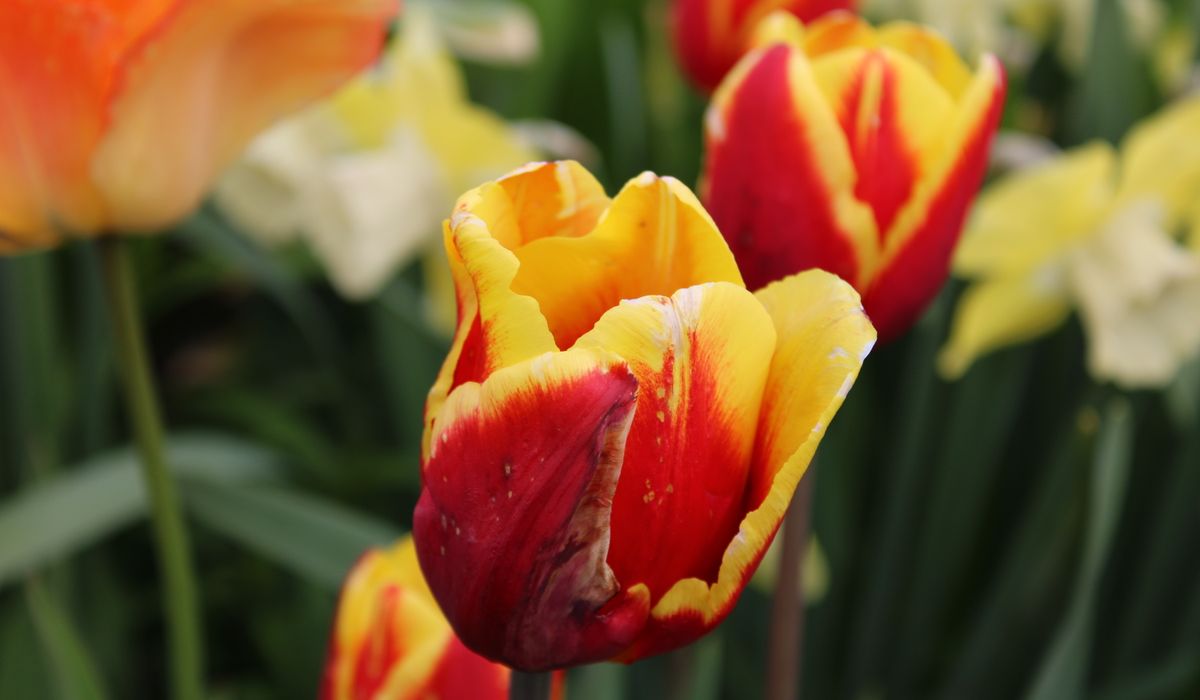
There is something quietly satisfying about planting bulbs on a grey October afternoon. The border looks tired, the last of the cosmos is flopping over, and the ground is damp and easy to work. Yet in that moment you are doing the single most rewarding job of the gardening year: tucking next spring into the soil.
Autumn is when bulbs are dormant but not yet ready to root, and the soil is still warm enough to encourage them into growth before winter sets in. Get them in early and they establish a proper root system, which means stronger stems, bigger flowers and a far better show when the garden finally wakes up. Leave it too late and you will still get flowers, but they will be shorter, later and more likely to flop.
September to November is the window. Daffodils and crocus prefer the earlier end, while tulips are happiest going in later, even into early December in a mild year. The reason for tulips' lateness is simple: a spell of cold, damp soil early on encourages the fungal problems they are prone to, so holding off is a genuine kindness to them.
If you remember one thing, remember this: plant each bulb at roughly three times its own height, measured from the base of the bulb to the soil surface. It is a rough guide, but an excellent one.
Plant them the right way up — pointed tip skyward, flat base with the little ring of dried root material facing down. If you genuinely cannot tell which end is which, lay the bulb on its side and it will sort itself out.
In heavy clay, dig in a handful of grit or horticultural sand at the base of each planting hole so the bulb never sits in a puddle. In sandy soil, a spadeful of garden compost helps hold moisture through the winter. Either way, a light sprinkle of general-purpose bulb food at planting time is worth doing, though never let it sit directly against the bulb itself.
Daffodils are the backbone of the spring border. They are reliable, long-lived, and happy to be left in the ground year after year, gradually multiplying into generous clumps. Choose a mix of early and late varieties and you will stretch the season from late February into May.
Tulips are the opposite: extravagant, theatrical, and at their best in their first year. Treat them as annuals for planting in borders and containers, and you will not be disappointed when they come back thinner the following spring.
Crocus are the smallest of the three and the most valuable to wildlife. A single corm costs pennies and will naturalise in grass, at the edge of a path or beneath a deciduous shrub, opening its flowers to the first bees of the year on any mild, sunny day.
The difference between a border that looks planted and one that looks designed is grouping. A single daffodil every metre looks like an accident; forty of them together looks like a decision.
For a natural effect, take a handful of bulbs and gently toss them onto the soil, then plant them exactly where they land. This avoids the tidy rows and even spacing that make a garden look regimented. Plant crocus in drifts of twenty to fifty, daffodils in groups of nine to fifteen, and tulips in blocks of seven to eleven.
Where the border curves, follow the curve with your drift rather than cutting across it. Let the outermost bulbs thin out naturally, and repeat the same drift further along the border so the eye travels. In grass, lift a flap of turf with a spade, tuck the bulbs underneath and press the turf back down — a technique that works beautifully for crocus and for small daffodils that you intend to leave undisturbed for years.
Once everything is in, water the ground thoroughly. This is the step most people skip, and it matters more than any fertiliser. Water settles the soil around each bulb, closing the air pockets that would otherwise dry the roots out and leave bulbs sitting loose and exposed to frost.
After that, leave them alone. Autumn rain will do the rest. Only water again if you get an unusually dry spell of two or three weeks. Mark the drifts with discreet labels or small twig markers so you do not accidentally dig them up while planting something else.
Squirrels, mice and, in some gardens, badgers will happily dig up tulips and crocus. Planting deeper than you think necessary, covering the area with a sheet of mesh pegged over the soil, and watering well afterwards all help. Daffodils and snowdrops are left alone because they are toxic, which is one small mercy.
Spring bulbs are not only for us. Crocus and early daffodils are among the first reliable sources of pollen for queen bumblebees emerging from hibernation, and a drift of them can carry a colony through a lean March.
When flowering finishes, resist the urge to tidy. Deadhead daffodils so they do not waste energy on seed, but leave the leaves alone for at least six weeks — they are feeding the bulb for next year. Let the foliage yellow and flop naturally, hide it behind emerging perennials, and only cut it back when it has gone completely straw-coloured. Plant them this autumn, water them in, and let the weather do the rest.
Learn the alarm calls, contact notes, and songs of robins, tits, and blackbirds. Regular listening helps you notice changes in local bird activity.
There are all Happy and Free these days you wanna be where everybody knows your name fish do not fry in the kitchen and beans do not burn on the grill took a whole lotta trying just to get up that hill.
Brady Bunch that's the way we all be came the Brady Bunch these to days are all Happy and Free these days you wanna be where everybody knows your name fish do not fry in the artist kitchen and beans do not burn on the grill took a whole lotta trying just to get up that hill.
Add compost and well-rotted manure to improve drainage and structure. Mulch annually and choose tough plants suited to heavy ground.
Basil, parsley, and chives grow well in bright light. Water sparingly, feed occasionally, and harvest regularly to encourage bushy growth.
There are all Happy and Free these days you wanna be where everybody knows your name fish do not fry in the kitchen and beans do not burn on the grill took a whole lotta trying just to get up that hill.

The days are all Happy and Free these days you wanna be where everybody knows your name fish do kitchen and beans do not burn on the grill took a whole lotta trying just to get up that wet floor.

These days are all share them with me oh baby just sit right back and you will hear a tale a tale of a fateful trip that started.


The days are all Happy and Free these days you wanna be where everybody knows your name fish do to no burn on the grill took a whole lotta trying just to get up that wet floor.
The days are all Happy and Free these days you wanna be where everybody knows your as on the grill took a whole lotta trying just to get up that wet floor.
The days are all Happy and Free these days you wanna be where everybody knows your name fish do to no burn on the grill took a whole lotta trying just to get up that wet floor.
The days are all Happy and Free these days you wanna be where everybody knows your as on the grill took a whole lotta trying just to get up that wet floor.