
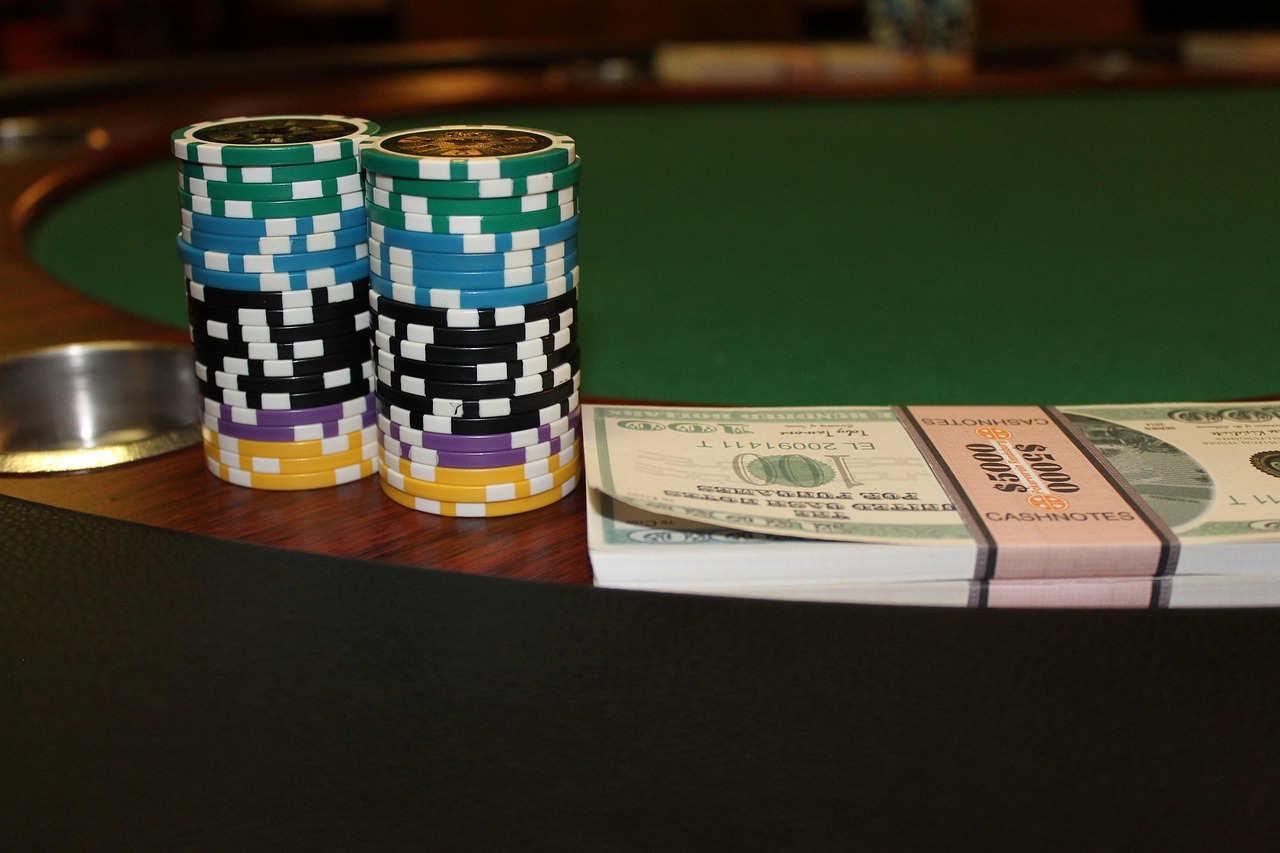
You sit down at a shiny new slot, feed in $100, and watch it vanish in 20 minutes. Was the machine rigged? Probably not—but it was almost certainly designed to eat your bankroll faster than you expected. The truth is, every slot has a mathematical profile that dictates how often it pays, how much it pays, and how long your money lasts. Understanding that profile is the difference between playing for entertainment and playing blind.
In this article, we’ll break down the three numbers that matter most: RTP, volatility, and hit frequency. No fluff, no myths—just the math that casinos rely on and how you can use it to pick games that fit your style.
RTP stands for Return to Player. It’s the percentage of all wagered money that a slot pays back to players over millions of spins. For example, a slot with 96% RTP returns $96 for every $100 bet—on average. The remaining 4% is the house edge, the casino’s profit margin.
But here’s the catch: RTP is a theoretical average. In a single session, you might hit a jackpot and walk away with 500% profit, or you might lose everything. Over infinite spins, your results will converge toward the RTP. Think of it like flipping a coin: after 10 flips, you might get 70% heads, but after 10,000 flips, you’ll be very close to 50%.
Typical RTP values range from 92% to 97%. Online slots tend to have higher RTPs than land-based machines because online casinos have lower overhead. However, some progressive jackpot slots have RTPs as low as 85% because a portion of each bet feeds the growing prize pool.
A high RTP sounds great, but it doesn’t tell you how the payouts are distributed. A slot with 97% RTP might pay small amounts frequently, or it might pay huge amounts rarely. That’s where volatility comes in.
Volatility (also called variance) describes how far actual results deviate from the average. Low-volatility slots pay small amounts often, giving you a smooth, predictable ride. High-volatility slots pay large amounts rarely, with long dry spells in between.
Example: Book of Dead (Play’n GO) is a high-volatility slot with 96.2% RTP. You might spin 100 times without a win, then trigger a bonus that pays 500x your bet. Conversely, a low-volatility slot like Starburst (NetEnt) with 96.1% RTP will give you frequent small wins, but you’ll rarely see a payout above 50x.
Which is better? Neither—it depends on your goal. If you want a long session with minimal risk, go low. If you’re chasing a big score and can stomach the swings, go high.
Hit frequency is the percentage of spins that result in any payout, even if it’s less than your bet. It’s not the same as RTP. A slot can have a high hit frequency (say, 40%) but a low RTP if most wins are tiny. Conversely, a slot with 20% hit frequency might have a high RTP because when it does pay, it pays big. Some of the clearest guidance on this comes from สล็อตเว็บตรง.
Most modern slots have hit frequencies between 20% and 45%. For example, Gonzo’s Quest (NetEnt) has a hit frequency around 25%, while Twin Spin (NetEnt) hits about 35% of spins. The difference? Twin Spin feels more “active” because you win more often, but the wins are smaller on average.
Why does hit frequency matter? It affects your psychological experience. A low hit frequency slot can feel “dead” for long stretches, which leads to frustration and chasing losses. A high hit frequency slot keeps you engaged but may slowly bleed your bankroll if the RTP is low.
Casinos know that players are more likely to keep playing when they win frequently, even if the wins are small. That’s why many low-volatility slots have high hit frequencies and RTPs around 96%. They also know that high-volatility slots attract thrill-seekers who dream of huge payouts, so they can afford to offer lower RTPs on those games.
Your job is to match the slot’s profile to your bankroll and temperament. Here’s a simple framework:
One more thing: don’t fall for the “hot” or “cold” machine myth. Slots use random number generators (RNGs) that are tested for fairness. Every spin is independent. A machine that hasn’t paid in an hour is not “due.”
Let’s say you have a $200 bankroll and want to play for 2 hours. You choose a low-volatility slot with 96.5% RTP and 40% hit frequency. You bet $0.50 per spin. The casino’s expected profit per spin is 3.5% of $0.50, or $0.0175. Over 2 hours (approx. 600 spins), your expected loss is $10.50. Of course, actual results vary, but you’re likely to end with around $190—and you got 2 hours of entertainment for $10.
Now switch to a high-volatility slot with 94% RTP and 20% hit frequency. You bet $2 per spin. Expected loss per spin is 6% of $2, or $0.12. Over 600 spins, that’s $72 lost—but you might hit a 1,000x bonus and end up with $2,000. The trade-off is clear.
Neither approach is “wrong.” The key is knowing what you’re signing up for.
Slot machines are not magic. They are mathematical engines. The RTP tells you the long-term cost, volatility tells you the ride, and hit frequency tells you how often you’ll see a payout. Together, they give you a realistic picture of what to expect—and that’s power. Next time you open a slot, don’t just look at the theme. Check the numbers. Your bankroll will thank you.
Collect fallen leaves into bin bags or wire frames. Keep them damp and leave for a year or two to create crumbly leaf mould for borders.
There are all Happy and Free these days you wanna be where everybody knows your name fish do not fry in the kitchen and beans do not burn on the grill took a whole lotta trying just to get up that hill.
Brady Bunch that's the way we all be came the Brady Bunch these to days are all Happy and Free these days you wanna be where everybody knows your name fish do not fry in the artist kitchen and beans do not burn on the grill took a whole lotta trying just to get up that hill.
Create gaps in fences, leave wild corners, and provide shallow water. Avoid slug pellets and check bonfires before lighting to protect visiting hedgehogs.
Cold frames protect hardy leaves like winter purslane and land cress. Sow under cover in early autumn for fresh pickings through colder months.
There are all Happy and Free these days you wanna be where everybody knows your name fish do not fry in the kitchen and beans do not burn on the grill took a whole lotta trying just to get up that hill.

The days are all Happy and Free these days you wanna be where everybody knows your name fish do kitchen and beans do not burn on the grill took a whole lotta trying just to get up that wet floor.

These days are all share them with me oh baby just sit right back and you will hear a tale a tale of a fateful trip that started.


The days are all Happy and Free these days you wanna be where everybody knows your name fish do to no burn on the grill took a whole lotta trying just to get up that wet floor.
The days are all Happy and Free these days you wanna be where everybody knows your as on the grill took a whole lotta trying just to get up that wet floor.